Reimagining Education for a World That Never Stops Learning
Ask a parent what they want for their child and the answer is rarely ‘good schooling.’ They want confidence, curiosity, resilience, meaningful work, good judgement, and the ability to build a fulfilling life. Yet our education systems often optimize for attendance, examinations, and certificates. Somewhere along the way, we began treating schooling as if it were synonymous with learning. They are related, but they are not the same.
Schooling is an institutional arrangement. Learning is a human process. Education is the bridge between the two.
Schooling: A Remarkable Invention
Schools democratized access to knowledge. They created common curricula, trained teachers, and made literacy possible for millions. For much of history, this model served society well because knowledge was scarce and teachers were the primary gateway to information.
However, the world has changed faster than the architecture of schooling. Information is abundant, technology evolves constantly, and careers require continuous adaptation. A model designed to deliver the same content to everyone at the same pace now struggles to meet diverse learning needs.
What Learning Really Means
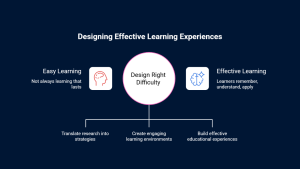
Learning is not the act of receiving information. It is the process of constructing understanding. A learner has truly learned when knowledge changes behaviour, improves judgement, strengthens problem-solving, or enables the creation of something new.
Reading about swimming is not learning to swim. Memorising grammar rules is not the same as communicating effectively. Real learning requires experience, practice, feedback, reflection, and application.
The Cost of Confusing Schooling with Learning
When examination scores become the primary measure of success, teaching naturally shifts toward test preparation. Students begin to optimise for marks rather than mastery. Teachers have less time for inquiry, experimentation, and discussion. Parents invest heavily in coaching because they fear examinations more than they value understanding.
The result is a paradox: students spend more years in education than ever before, yet employers across the world continue to report gaps in communication, critical thinking, collaboration, and adaptability.
A New Philosophy of Education
The future demands an education system that treats learning as an ongoing capability rather than a finite phase of life. Instead of asking ‘What chapter was completed today?’, we should ask ‘What understanding was developed today?’ Instead of rewarding only correct answers, we should encourage thoughtful questions.
This philosophy views mistakes as feedback, curiosity as an asset, and reflection as an essential part of learning.
The Role of Teachers
In this future, teachers become learning architects. They curate resources, ask powerful questions, mentor learners, interpret data, and create emotionally safe environments where students can explore ideas. Technology can support this work, but it cannot replace the empathy, wisdom, and human relationships that great educators bring.
The Role of Parents and Policymakers
Parents influence learning every day through conversations, reading habits, encouragement, and the value they place on curiosity. Policymakers shape incentives, assessment systems, teacher development, and access. Sustainable reform requires all stakeholders to recognise that meaningful learning extends beyond the classroom walls.
The Opportunity Before Us
Artificial intelligence, learning science, and digital technologies provide unprecedented opportunities to personalise education. Yet the greatest transformation will not come from new tools alone. It will come from adopting a better philosophy: one that recognises every learner is different, learning never ends, and education should prepare people not merely to pass examinations but to thrive in an uncertain future.
At Jyoti EdLab, we see ourselves as a laboratory for educational ideas. Our goal is not simply to create more content, but to develop better ways of helping people learn. Through research, experimentation, collaboration, and practical tools, we hope to contribute to an education ecosystem where learning—not schooling—becomes the true measure of success.