By SN Koushik
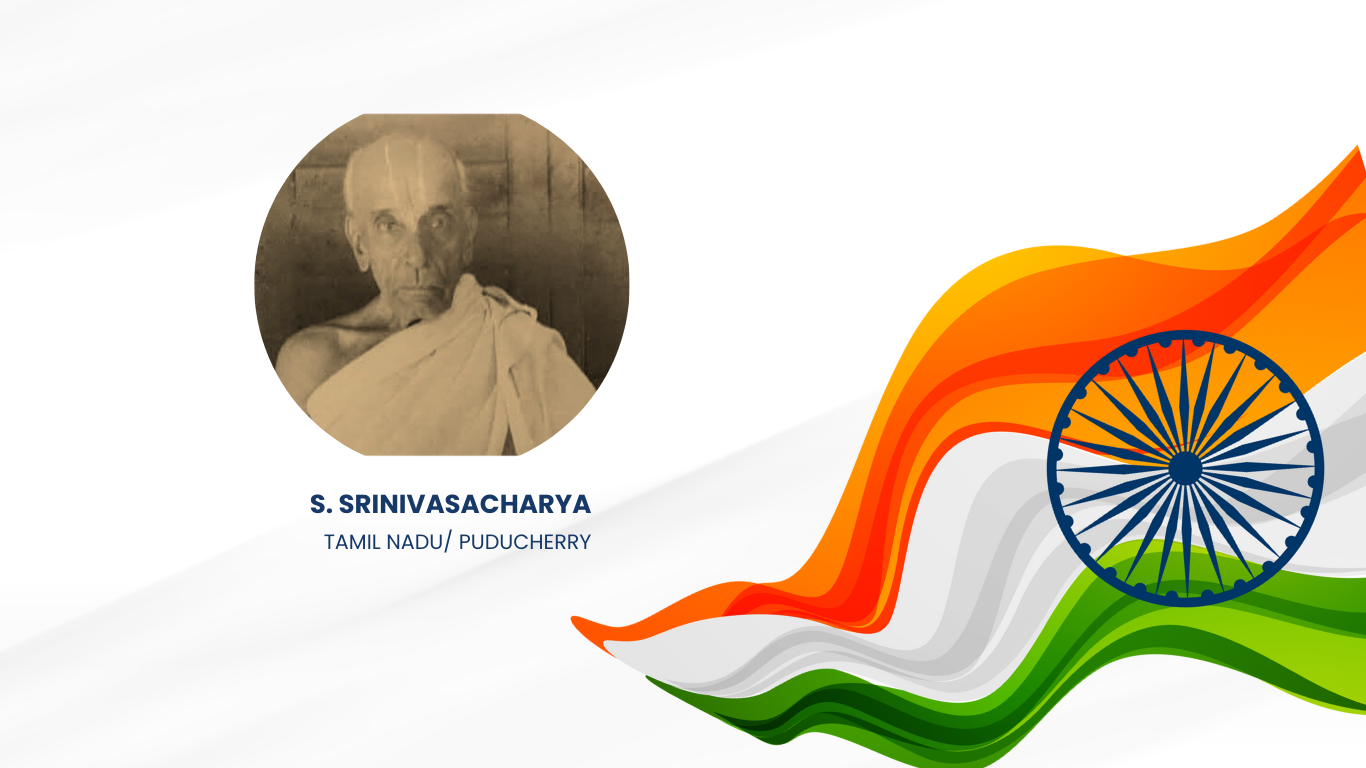
When we think of India’s fight for independence, towering names often dominate the narrative. Yet, scattered across the landscape of history are figures like S. Srinivasacharya — men and women whose work in the shadows was no less vital than the battles fought in the open. Srinivasacharya’s life is a testament to how intellect, organisation, and quiet defiance can be as revolutionary as fiery speeches or armed uprisings.
Early Life and Revolutionary Beginnings
Born into a traditional Mandayan family, S. Srinivasacharya grew up in French-administered Pondicherry, a unique setting in colonial India. Pondicherry’s freedom from direct British control made it a haven for political exiles, writers, and revolutionaries who sought refuge from the Raj’s persecution.
From an early age, Srinivasacharya was exposed to nationalist ideals. The writings and speeches of Swami Vivekananda deeply influenced him — especially the call for fearless service to the nation. This philosophical grounding shaped his approach to the freedom struggle — not as a public orator or military leader, but as a behind-the-scenes strategist.
Learning the Art of Resistance
In Pondicherry’s politically charged environment, Srinivasacharya gravitated toward revolutionary circles. Here, he formed a close association with C. Subramania Bharati, the poet-patriot whose pen stirred nationalist passions across South India.
Together, they used nationalist newspapers — especially India — as powerful tools for awakening political consciousness. Through carefully crafted articles, they amplified the demand for Swaraj, inspiring ordinary citizens to question the legitimacy of colonial rule.
But Srinivasacharya’s contributions extended far beyond journalism. Skilled in underground operations, he became a trusted link between different arms of the movement by:
- Ferrying secret messages between activists
- Organising safehouses for political exiles and fugitives
- Smuggling banned publications into British territories to keep revolutionary ideas alive
He also travelled frequently, coordinating with prominent nationalists like Bipin Chandra Pal, Sri Aurobindo, and Dr. Balkrishna Shivram Moonje, ensuring seamless communication between Pondicherry and nationalist strongholds in British India.
As a key stakeholder in the Swadeshi Steam Navigation Company, he also played a role in challenging British shipping monopolies with a nationalist alternative.
Later Freedom Struggle and Independence
As British intelligence began to close in on nationalist networks — and even French authorities increased their watch over Pondicherry’s radicals — Srinivasacharya adapted with remarkable resilience. He devised new routes, disguises, and methods to ensure the uninterrupted flow of information and literature.
Until India’s independence in 1947, Srinivasacharya remained a critical bridge between the intellectual resistance of Pondicherry and the active revolutionary cells in British India.
Legacy
Though his name rarely features in history textbooks, S. Srinivasacharya’s life reminds us that revolutions need more than visible leaders — they require planners, organisers, and connectors who keep the movement’s machinery running.
His blend of intellect and action, mastery of quiet strategy, and refusal to seek public glory make him a rare figure in the annals of the freedom struggle.
Why S. Srinivasacharya Matters Today
In today’s world of social media activism and public visibility, Srinivasacharya’s example teaches us that lasting impact comes from conviction, not from the size of one’s audience. True change is often built on the tireless work of those who act without expectation of recognition.
Key Lessons from His Life
- Fuse intellect with action – Ideas alone are not enough; they must be put into motion.
- Build disciplined networks – Success in any movement depends on strong, trusted connections.
- Value both poets and planners – Every revolution needs its voices and its strategists.
S. Srinivasacharya’s story deserves a place in our collective memory — not as a footnote, but as proof that even in the quietest corners, history is being written.
(The author is the grandson of S. Srinivasacharya)